
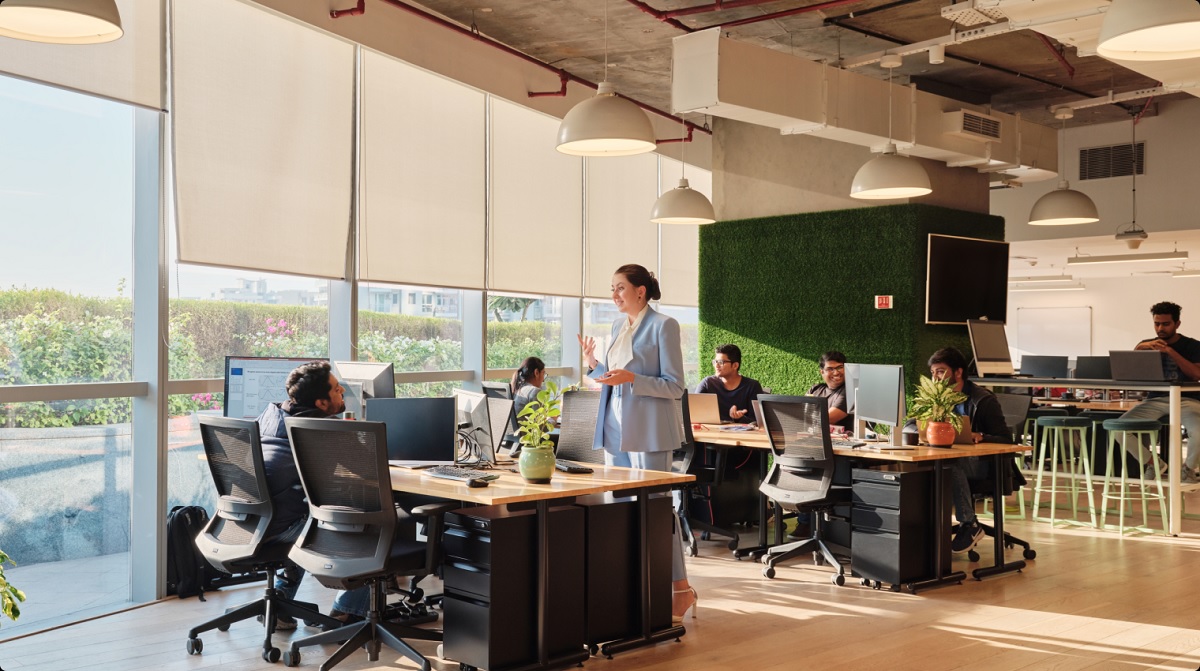

If there’s one thing that’s started to go out of style in the business world, it’s a traditional office lease. From small to large companies, they’re stepping away from multiple year commitments and fixed spaces and embracing the opportunity to adjust. While this may seem more plausible for startups and freelancers, even established organizations are making the switch, and it’s not merely to save costs.
The Downfall of Committing for the Long Haul
Most leases for commercial space tend to be anywhere from three to five years at a minimum. That’s a long time to have a gut feeling about where a company will be, especially during changing market conditions, unanticipated team expansions or industry disruptions. If a company signs a five-year lease today, there’s a high likelihood that come two years from now, that office no longer resembles actual needs.
Additionally, from a financial standpoint, those traditional leases require personal guarantees, expensive security deposits (three to six months’ rent as collateral), and responsibility for everything from HVAC malfunctions to parking lot repairs. Even though the landlord’s name is on the building, the tenant inevitably foots the bill when an AC unit fails. In addition, there’s upfront investment into furnishing the space, installing the Internet and overall making it work, which all takes time.
Exiting becomes a problem as well. Expanding? Hopefully next door is vacant; otherwise, expect hefty demolition fees. Downsizing? Sorry, as the lease still has another three years left to go. Organizations pay for empty desks or stuff too many people into too little space just to avoid a costly exit.
What Month-to-Month Realistically Provides
In contrast, flexible office space arrangements reverse this philosophy. There are no three- or five-year committals; there are monthly payments based on precisely what companies need now. Spaces come furnished and readily accessible, desks, chairs, Internet, phones, even coffee and conference rooms. There are no build out costs, no furniture purchasing costs, and no waiting periods while the Internet company shows up.
At the end of the day, this per-square-foot assessment may be higher than conventionally leased spaces. However, when factoring all that’s included in the monthly payment—utilities, maintenance, reception responsibilities, supplies, the cost of convenience is often lower than conventional office management in the long run.
Moreover, in the absence of stacks of paperwork that assert responsibility for covering costs and repairs like conventional offices boast better surprises than conventional offices. One bill per month equates to everything without additional landscape maintenance fees or surprise property tax increases.
The real advantage comes as needs shift. Companies can use more offices or desks next month if growth surges faster than anticipated. New large projects mean companies can house outside contractors without an ounce of a problem by providing them space. This is assuming those contractors don’t take up valuable employee real estate during the slow months when they can work from home instead.
For companies that want to remain flexible but need professional environments, options like a coworking space allow companies to access the same infrastructure and services as a traditional space without rigid commitments.
Who’s Really Making This Change?
In the past, tech firms and creative agencies were early adopters; now this mix has expanded widely, from law firms using flexible space for their satellite offices in emerging markets to financial advisors and business consultants who need professional meeting facilities but not empty offices in-between client appointments; administrative practices need spaces separated from clinical spaces while sales teams can establish a presence in target territories without long-term concern.
Even larger corporations re-evaluate their real estate needs on a national scale, for positions that occur within multiple cities that only require small teams of employees in each location, a five-year lease makes less sense than flexible arrangements that can expand or contract at any given time within brief notice.
Whether due to increased critical thinking during the pandemic or reduced remote work options, all that matters is if an office space is necessary in multiple locations around the country where companies should stop paying for spaces that won’t accommodate future needs if other better options exist.
The Costs Work in Favor
Annual traditional office space costs run anywhere from $25 per square foot to $75 per square foot on an annual basis depending on the location and building. This does not account for operating expenses, utilities or proper maintenance which adds an additional $8 per square foot to $15 per square foot where all costs factor into owning and operating anything from furniture (between $1,000 and $3,000 per workstation) to IT infrastructure and reception coverage.
Month-to-Month Office Space solutions offer those conveniences for one predictable price. There are no capital expenditures for furniture. There are no unexpected HVAC meltdowns in August. There are no recourse options where companies must hire receptionists either as window covering mail options is easily provided. Therefore, as a total monthly cost could equal or beat traditional office space provides once accounted for and before considering flexibility’s value.
Cash Flow Matters
Cash flow, and not accounting principles, run a business. Traditional leases effectively force cash out, in addition to first month, last month and security deposit costs and buildouts as well as furniture purchases which averages between $50-$150K lost before anyone even sits in their office chair.
Month-to-Month arrangements require minimal upfront capital which allows businesses to divert other revenues where necessary to help run and sustain operations.
Additionally, cash flow predictability matters; with conventional office space it’s one month it’s plumbing issues; next it’s roof concerns; next it’s parking lot maintenance which depletes even more resources and management stress.
Month-to-Month arrangements have such all-inclusive monthly billing that cash flow becomes easier; projects the budget for a year becomes easier when expectations aren’t fluctuating monthly based on who suddenly decides what’s at fault this time around.
The Downsides No One Talks About
Flexibility undoubtedly comes at a price. There are trade offs; flexible spaces aren’t yours alone; they might feel less like your office but more like your professional rented space. There’s minimal customization; don’t expect paint jobs or specific floor installation in lieu of tile vs carpet options.
Furthermore, costs can also adjust; while companies technically can adjust prices based on client demand much sooner than fixed leases, flexible arrangements can make similar decisions just as easily without warning.
Certain businesses need certain arrangements that flexible spaces can accommodate, specific machines can’t be used; odd layouts can’t be compromised; security clearances prevent enough customization that traditional ownership still makes more sense.
If ownership means return on investments from buildouts or complete control over an environment trumps everything else, then traditional leases make sense.
When Is the Right Time?
Ultimately, it comes down to what makes sense right now. Organizations that prioritize predictability in location goals are minor; those who want full control of their spaces over time or confident crews projecting growth projections feel confident with five-year commitments still benefit from conventional leases.
Those organizations requiring flexibility over time or don’t know what their greatest amount of future space could accommodate successfully find solutions through month-to-month arrangements.
The demand begs flexibility office providers to continue growing because clients find there are no alternatives naturally dollar values cast votes in the marketplace.
This doesn’t mean everyone should ditch conventional leases forever, it means that locking yourself in for years at a time isn’t always the best decision anymore.
For many professionals and organizations who are willing to sacrifice slightly lower per square-foot rates or custom built out prestige over flexibility today to make it work tomorrow they’ve found their answer.
The change in office space dialogue suggests that professionals have real options beyond the typical lease negotiations compared with what’s always been done for what makes sense last year, and this trend is expected to last well into the future.
Comments are closed.