
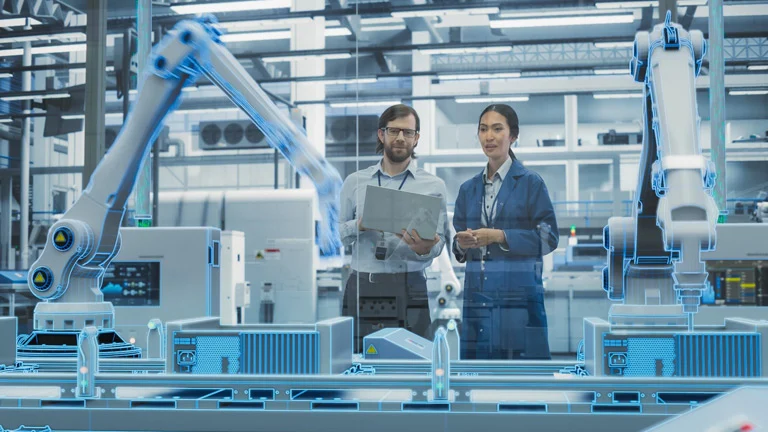

Robotics has become a transformative force within the business and manufacturing sectors, introducing groundbreaking changes that have reshaped how companies approach production, efficiency, and innovation. As industries continue to seek ways to improve performance and reduce costs, robotics has emerged as an invaluable tool for achieving these goals. In this article, we will explore the profound impact of robotics on the business and manufacturing landscape, highlighting the key benefits, challenges, and the future of robotics within these industries.
- Increased Efficiency and Productivity
One of the most significant advantages of robotics in manufacturing is its ability to enhance efficiency and productivity. Robots can operate 24/7 without the need for breaks or rest, which enables businesses to increase their output significantly. Whether it is assembling components, packaging products, or conducting quality checks, robots can perform tasks with unparalleled speed and consistency.
Additionally, robots can carry out repetitive and labor-intensive tasks with greater precision, reducing the chances of human error. This heightened accuracy in production processes means fewer defective products, less waste, and improved quality control. Businesses that incorporate robots into their manufacturing lines often see faster turnaround times and a smoother flow of operations, contributing to greater overall productivity.
- Cost Reduction
While the initial investment in robotic systems may be high, the long-term cost savings they offer are substantial. Robots can take over manual and time-consuming tasks, allowing businesses to reduce their dependence on human labor for routine operations. As a result, companies can allocate human resources to more complex, value-adding activities that require creative problem-solving, critical thinking, and decision-making skills.
Moreover, robots contribute to cost reductions by minimizing errors and defects, which in turn reduces the need for rework and material waste. By enhancing precision in manufacturing processes, businesses can optimize their use of raw materials, reducing the costs associated with excess consumption and inefficiencies.
- Enhanced Safety in the Workplace
Manufacturing environments are often associated with hazardous conditions, such as heavy machinery, toxic chemicals, and extreme temperatures. Robotics plays a key role in improving workplace safety by handling dangerous tasks that would otherwise pose risks to human workers. For example, robots can be programmed to operate in environments where toxic substances are present, or to lift heavy loads, reducing the likelihood of workplace injuries and accidents. The implementation of such advanced robotic systems by Olympus Technologies, or similar firms, can be beneficial in increasing safety standards. This can protect workers from immediate dangers as well as reduce long-term health risks from repetitive strain or exposure to harmful environments.
Furthermore, robots equipped with advanced sensors and cameras can monitor their surroundings, preventing collisions and ensuring smooth coordination between human workers and automated systems. As a result, businesses that integrate robotics into their operations can provide safer work environments, ultimately fostering a healthier and more productive workforce.
- Flexibility and Customization
Robots in manufacturing are not just limited to performing one type of task. With advances in programming and artificial intelligence (AI), robots are becoming more versatile and adaptable to different production requirements. Manufacturers can reprogram robots to switch between tasks, making it easier to adjust to changing market demands and customer needs.
This flexibility enables businesses to create more customized products at scale. For example, robots can be used to assemble components of varying sizes and configurations, offering manufacturers the ability to produce a broader range of products while maintaining high levels of quality and efficiency. This is particularly valuable in industries where customization and personalization are important, such as the automotive and electronics sectors.
- Advancements in Collaborative Robotics (Cobots)
Collaborative robots, also known as cobots, are designed to work alongside human operators rather than replace them. These robots are equipped with sensors and safety features that allow them to interact safely with human workers in shared spaces. Cobots are particularly beneficial in manufacturing environments where tasks require a combination of human dexterity and robotic precision.
Cobots can assist workers in tasks such as assembly, packaging, and quality inspection, freeing up employees to focus on more strategic aspects of production. They are also easier to implement in existing operations, as they do not require the extensive reconfiguration of entire production lines. The rise of collaborative robotics enables businesses to combine the strengths of human workers and robots, improving productivity while retaining the creativity and adaptability of the human workforce.
- Impact on the Labor Market
While robotics has led to significant advancements in manufacturing, it has also raised concerns regarding its impact on the labor market. The widespread adoption of robots in production lines could potentially lead to job displacement for workers whose roles are automated. However, it is important to recognize that robotics does not necessarily eliminate jobs but rather changes the nature of work.
As robots handle more routine and dangerous tasks, human workers are increasingly required to take on roles that involve creativity, problem-solving, and oversight. The demand for skilled workers, such as robot programmers, engineers, and technicians, is growing as companies seek individuals who can manage and optimize robotic systems. Moreover, businesses may invest in training and reskilling programs to help workers transition to more advanced roles, ensuring they can continue to contribute to the organization’s success.
- Environmental Impact and Sustainability
In addition to improving operational efficiency, robots can also play a significant role in enhancing the sustainability of manufacturing processes. By reducing waste, improving energy efficiency, and enabling precise production techniques, robotics can contribute to more environmentally friendly practices. For instance, robots can be used to optimize the use of raw materials, ensuring that resources are utilized to their fullest potential.
Additionally, robots that use renewable energy sources or operate on energy-efficient systems can further reduce the carbon footprint of manufacturing operations. As sustainability becomes an increasingly important consideration for businesses and consumers alike, the integration of robotics into production processes offers a powerful tool for companies aiming to meet their environmental goals.
- The Future of Robotics in Manufacturing
The future of robotics in business and manufacturing is promising, with continued advancements in AI, machine learning, and automation paving the way for even greater capabilities. The ongoing development of autonomous robots, which can make decisions and learn from their environments, will push the boundaries of what is possible in manufacturing.
In the future, we can expect to see robots that are even more intuitive, able to adapt to complex, dynamic production environments, and capable of collaborating seamlessly with human workers. As technology continues to advance, the impact of robotics will only grow, offering businesses new ways to enhance productivity, reduce costs, and improve the overall manufacturing experience.
Robotics has firmly established itself as a transformative force in the manufacturing industry, providing companies with unparalleled opportunities to enhance efficiency, safety, and sustainability. By embracing robotics, businesses can stay competitive in an increasingly fast-paced and demanding marketplace, unlocking new avenues for growth and innovation. As the technology continues to evolve, the role of robotics in manufacturing will only expand, shaping the future of the industry for years to come.
Comments are closed.